Bike Training
Bike Training in Guwahati: Learning Control Step by Step
A beginner motorcycle training guide covering vehicle fit, clutch coordination, controlled stopping, turning and readiness for supervised road practice.
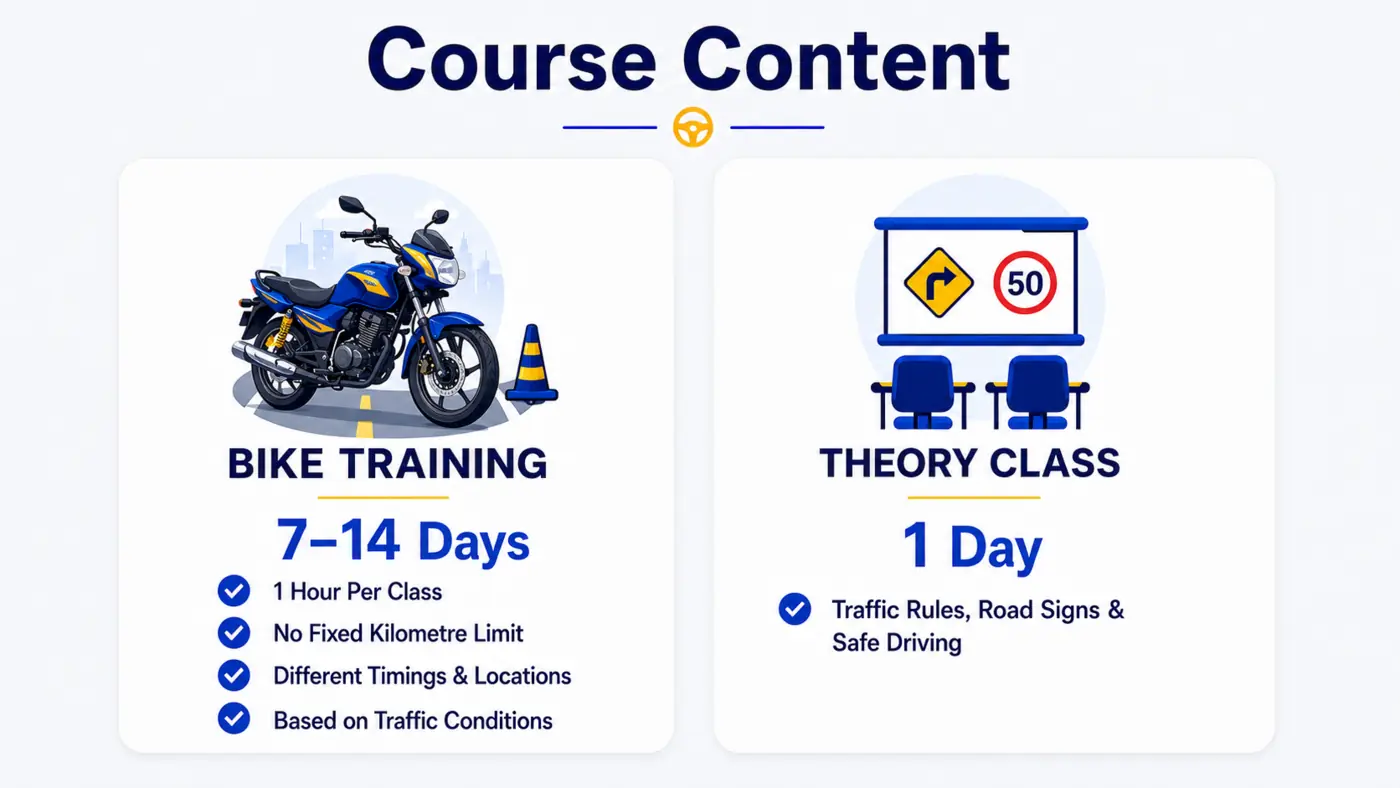
Learning a geared motorcycle involves several tasks at once: balance, throttle control, clutch operation, gear selection and observation. A structured lesson separates these tasks before combining them. Explain your experience honestly, including whether you have ridden only a bicycle or an automatic two-wheeler.
Become familiar with the training motorcycle
Before riding, identify the controls with the instructor and check that you can reach them comfortably. Learn how to stop the engine and secure the motorcycle. A correctly fitted helmet, suitable footwear and appropriate protective clothing belong in the preparation for every lesson.
Control locations and braking systems differ between vehicles. Ask about the actual training model rather than relying on advice intended for a different motorcycle. The instructor should demonstrate the sequence for preparing to move and bringing the motorcycle to a controlled stop.
Coordinate clutch and throttle at a manageable pace
Initial practice should happen in a suitable space under supervision. The purpose is to understand how the motorcycle begins moving and how small control changes affect it. If the engine stalls, stop, reset and work through the cause with the instructor; repeated rushed attempts can make the task harder.
Move on to gear changes only when the starting and stopping sequence is dependable. Practise one clear objective at a time so that looking ahead and maintaining direction do not disappear while concentrating on the controls.
Build turning and braking judgement
Begin with simple paths and generous space. Learn to adjust speed before a turn and keep movements smooth. Braking practice should reflect the motorcycle's controls and the available grip, with the instructor choosing an appropriate exercise. Emergency stopping deserves its own supervised practice, not an improvised experiment on a busy road.
Prepare for shared roads
Road readiness also means using mirrors and indicators, allowing space around other vehicles and noticing pedestrians before they enter your path. Discuss how road surface, rain and visibility affect the next lesson. Completing a set number of sessions alone does not establish independent riding readiness.
Explore RI Driving School's bike course and road-safety approach. Contact the school to confirm vehicle availability, documents and a timetable suited to your current ability.