How Wet Roads Affect Braking and Vehicle Control | RI Driving School
Wet surfaces can make stopping harder and steering less predictable. Avoid abrupt inputs and increase your margin for error.
35 guides
Wet surfaces can make stopping harder and steering less predictable. Avoid abrupt inputs and increase your margin for error.
Use a speed that allows careful observation and stopping within visible space. Be prepared to wait where clearance is uncertain.
Expect people to emerge unexpectedly near crowded areas. Keep your attention on both the road ahead and activity at its edges.
Make seat-belt use part of the routine before moving off. Check that occupants are properly secured and restraints fit correctly.
Theory sessions connect signs, signals and road responsibilities with the decisions learners make in practical classes.
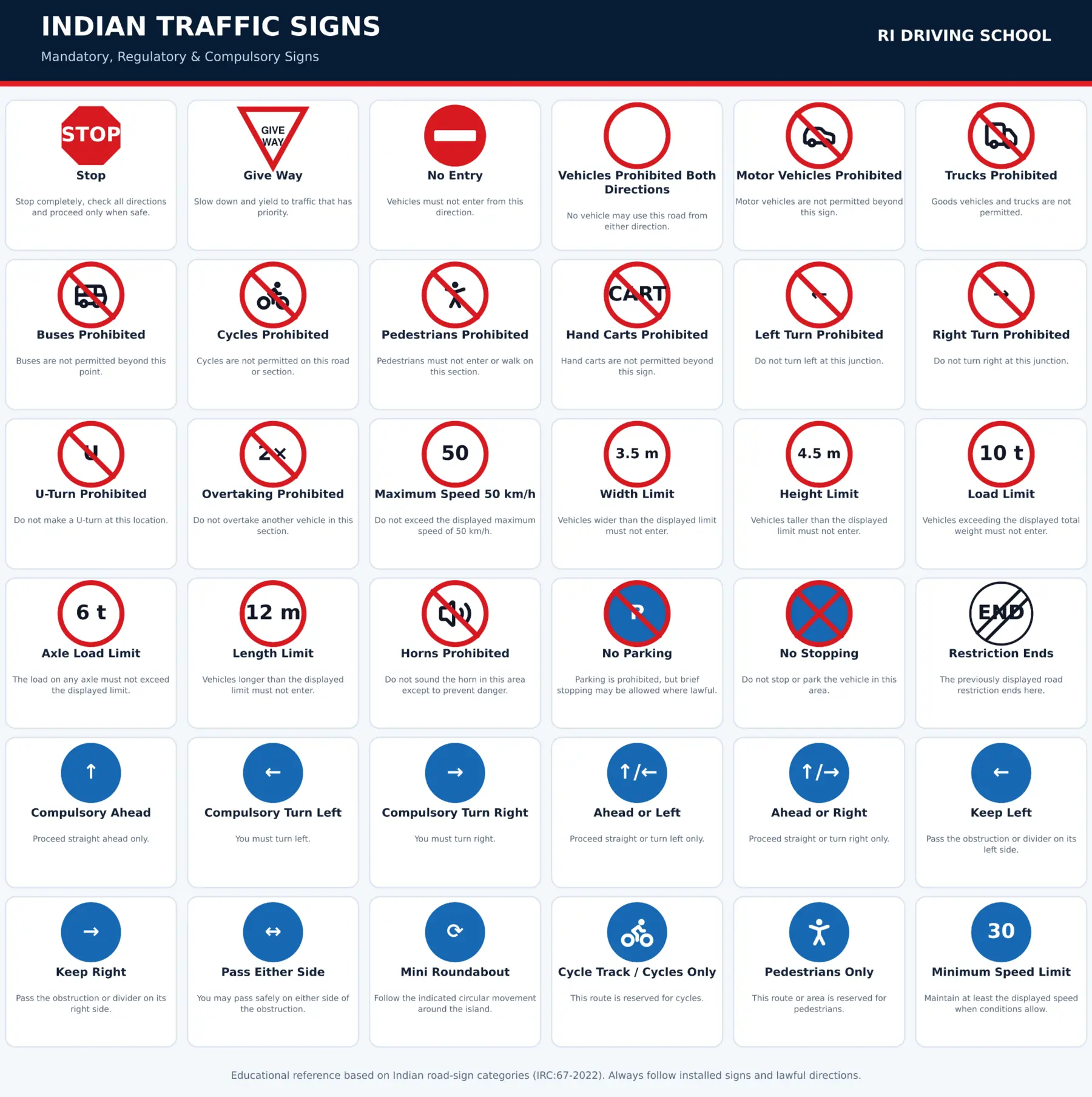
Study a small group of signs at a time and explain what action each one requires before reviewing them on real routes.
Knowing why a manoeuvre is safe helps learners move beyond memorising controls and develop better judgement.
Practise recognising hazards, observing changing traffic and explaining a safe response with your instructor.
All vehicle learners need to understand road instructions. Review sign categories and how each applies to the vehicle being used.
Discuss learner requirements, signs, signals and basic road responsibilities with your instructor before any public-road session.
Patient, predictable behaviour gives other people time to respond. Avoid aggressive gestures, unnecessary horn use and rushed manoeuvres.