How to Control a Vehicle Without Sudden Braking | RI Driving School
Reading traffic farther ahead helps you ease off and brake progressively. Emergency situations still require a prompt appropriate response.
227 guides
Reading traffic farther ahead helps you ease off and brake progressively. Emergency situations still require a prompt appropriate response.
Overtaking needs clear visibility, sufficient space and compliance with road restrictions. Waiting is often the safer decision.
Reduced visibility makes observation more demanding. Discuss lighting, glare and appropriate speed before supervised low-light practice.
Rain can reduce visibility and grip. Review wipers, lights, slower speeds and extra following space before a wet-weather lesson.
Wet surfaces can make stopping harder and steering less predictable. Avoid abrupt inputs and increase your margin for error.
Use a speed that allows careful observation and stopping within visible space. Be prepared to wait where clearance is uncertain.
Expect people to emerge unexpectedly near crowded areas. Keep your attention on both the road ahead and activity at its edges.
Make seat-belt use part of the routine before moving off. Check that occupants are properly secured and restraints fit correctly.
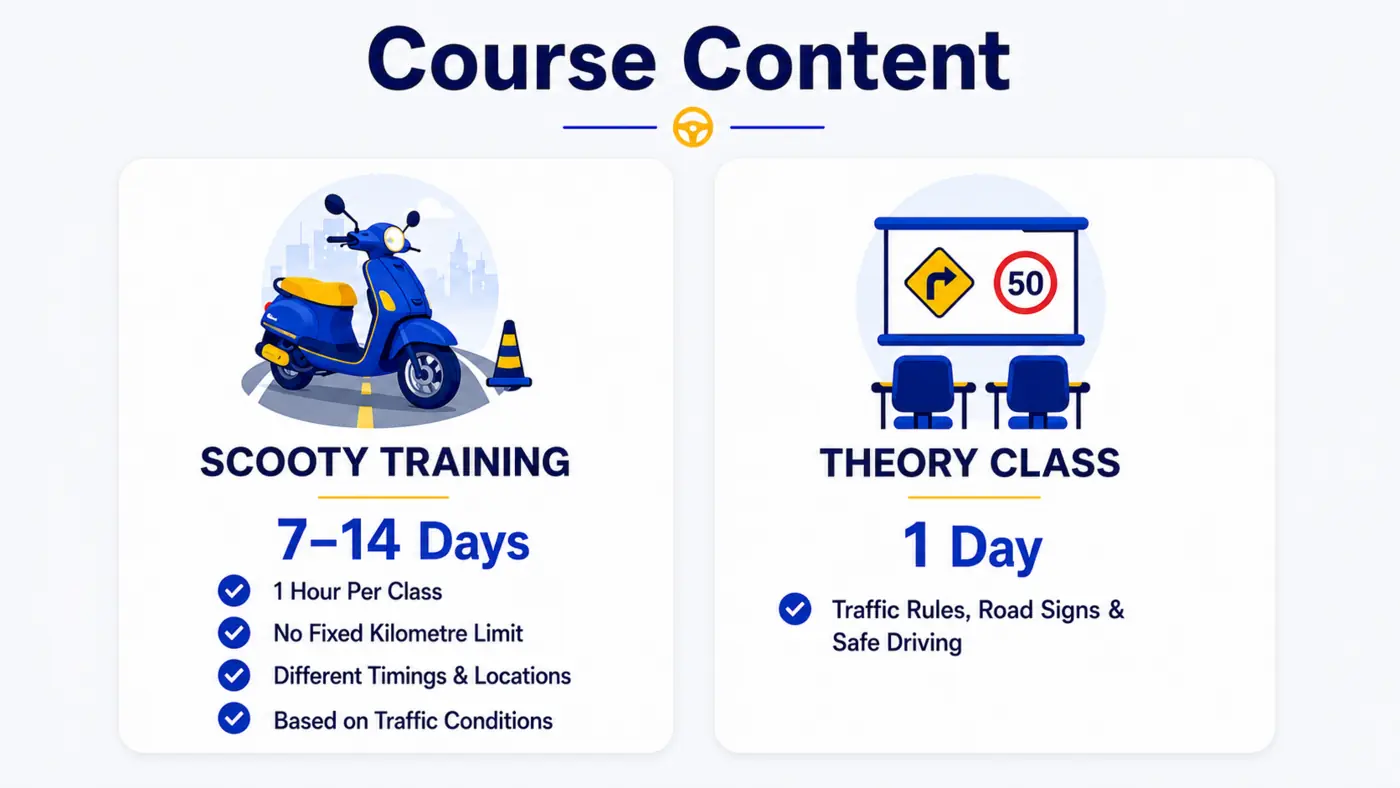
Start with controls and balance in a suitable practice space before progressing to supervised riding on selected roads.
Ask about beginner support, vehicle availability and training locations that suit your current confidence and ability.
Balance practice should begin gradually at controlled speeds, with an instructor explaining posture, vision and handlebar control.
Practise gentle accelerator inputs and controlled use of the brakes. Learn how the particular training scooty responds.